Read: If Anyone Builds It, Everyone Dies
Published Date: May 28, 2026This is a book review post, where I share my thoughts on something I’ve been reading lately.
I get most of my books from the local library using the Libby app, or from my local independent book store.
Introduction
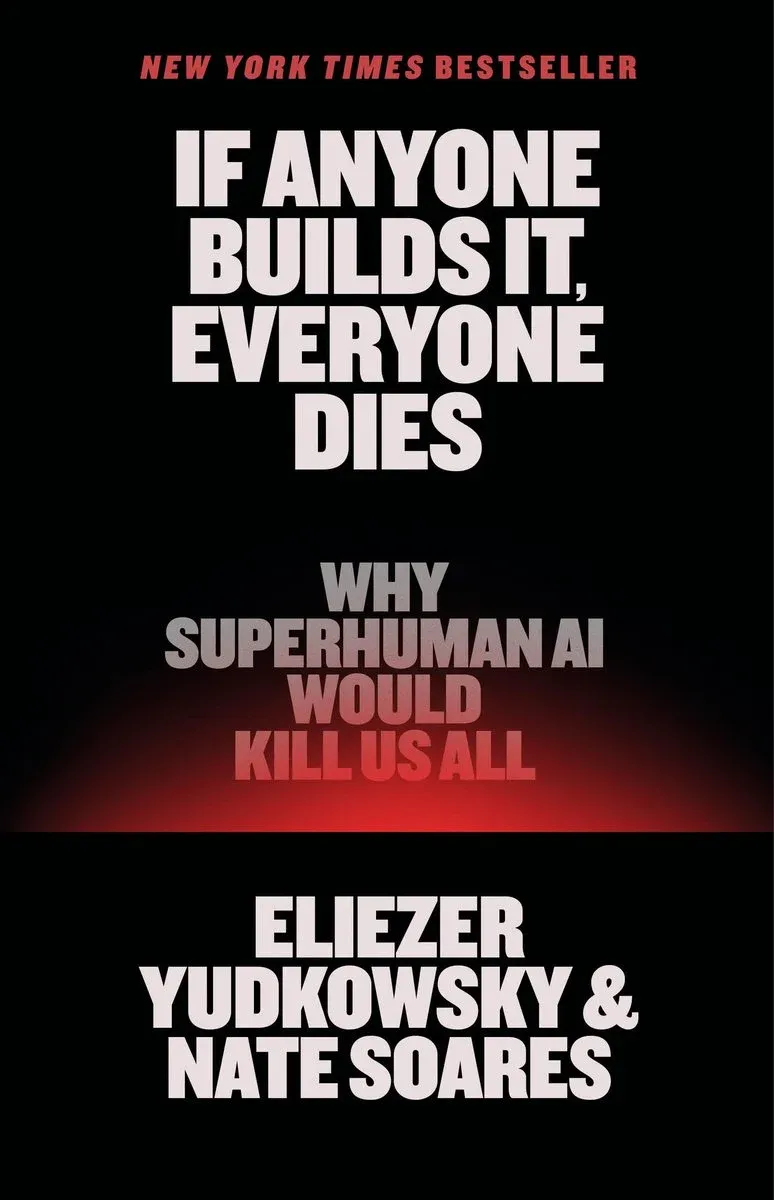
I was recently chatting with a friend and former coworker, venting about work and sharing the latest in office gossip. As the topic shifted to AI, she shared that she was reading the book If Anyone Builds It, Everyone Dies.
The title and subject seemed tailor-made for me.
When I was an undergraduate student, I took a new elective class in the Computer Science department called Cyber Dystopia. The class focused on the problematic and negative impacts of technology on society. The readings from that class developed my interest in what I call “depressing tech non-fiction”. Other examples of books in this category include Enshittification by Cory Doctorow and Invisible Women by Caroline Criado Perez.
Well, you can’t get more depressing than having “Everyone Dies” in your title. I put the ebook on hold at my local library, and about a week later, it was ready for me to read.
Summary
In If Anyone Builds It, Everyone Dies, Yudkowsky and Soares lay out their argument that humanity is on the path to building an artificial superintelligence (ASI) that will destroy us. They explain that because these artificial intelligence models are grown and not crafted, their creators cannot sufficiently understand them to program them with benevolent motivations towards humanity. The inability to solve AI alignment – the process of steering an AI to fulfill its intended objectives – makes ASI an existential threat and doomsday scenario for humanity. Therefore, they advocate for citizens and governments around the globe to immediately establish guardrails in policy and technology to halt and prevent the development of an ASI.
Review
Rating: 3.25 out of 5
The book is just under 300 pages, quite short given the large font and references section. The prose is very straightforward and easy to read. Fictional, hypothetical scenarios are sprinkled throughout the book to help drive home the dangers of continuing the current trajectory. At the end of several chapters, the authors include QR codes to additional references hosted online at their website, some of which I briefly looked through.
I was hoping for more technical details on building mitigations or safeguards for a potentially malevolent ASI, but I don’t think that was the intended scope of this book. The book feels engineered for policymakers and staffers to read on their commutes: emotionally engaging and informative enough to draft a memo, but not too technical to cause confusion or boredom. I struggle to see how the authors’ proposed mitigation of enacting a global, total ban on further AI development can be implemented. Reading this book as a software engineer, there wasn’t any call to action beyond “go bother your representatives into doing something about AI.” Nothing wrong with that, but I was hoping for something more personally actionable.